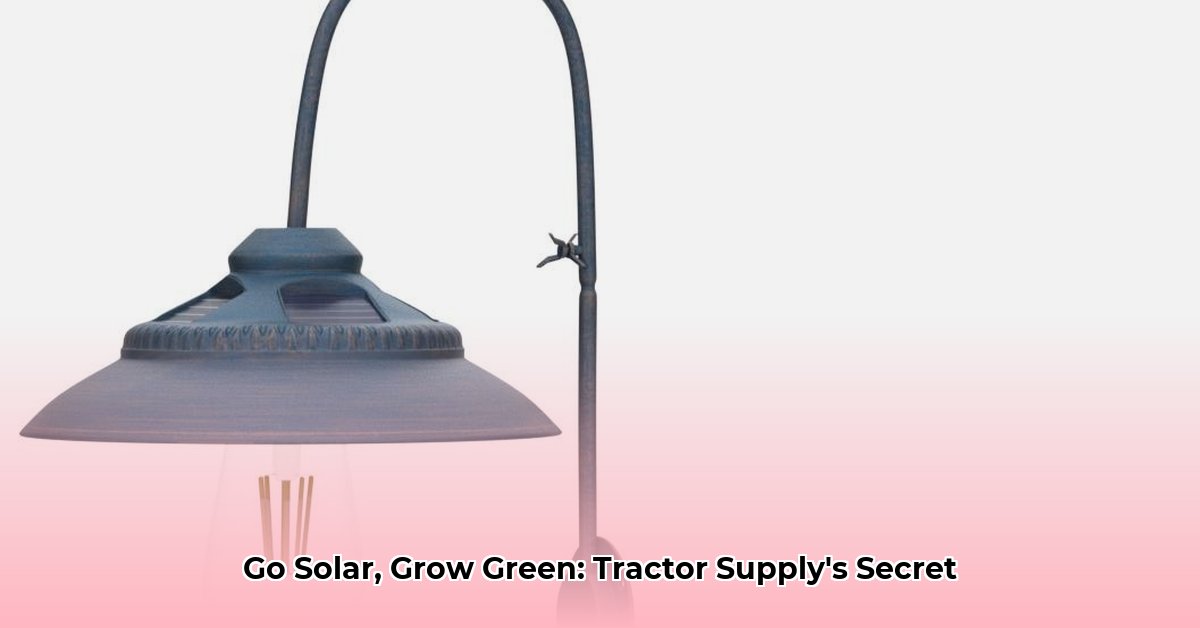
Solar Lights from Tractor Supply: Illuminating Sustainable Farming Practices
Tractor Supply Company (TSC) offers a range of solar-powered lighting solutions designed for agricultural applications. These lights promise to enhance farm safety, reduce energy costs, and minimize environmental impact. However, a comprehensive evaluation requires detailed product specifications currently unavailable from TSC. This guide aims to provide farmers with a framework for assessing the viability of TSC's solar lights and making informed purchasing decisions.
Shining a Light on the Benefits: Why Choose Solar for Your Farm?
Adopting solar lighting presents several key advantages for farmers:
- Environmental Sustainability: Solar power significantly reduces carbon emissions compared to traditional grid-powered lighting, contributing to a smaller environmental footprint.
- Cost Savings: While the initial investment might seem higher, long-term electricity cost savings can offset the upfront expense, leading to improved profitability.
- Enhanced Safety: Improved nighttime visibility enhances worker and livestock safety, reducing the risk of accidents.
- Increased Operational Independence: Reduces reliance on grid electricity, offering increased operational efficiency and resilience.
Analyzing TSC's Solar Lights: A Critical Assessment
While TSC's marketing materials highlight the benefits of their solar lights, a thorough analysis is hampered by a lack of crucial data. Key performance indicators (KPIs) such as lumen output (a measure of brightness), battery lifespan, and durability in harsh weather conditions are absent. This lack of transparency makes a direct comparison with competitor products difficult.
"Without comprehensive data on performance metrics, farmers are left with limited ability to make informed decisions," says Dr. Emily Carter, Agricultural Engineer at the University of California, Davis. "This data gap presents a significant obstacle to widespread adoption of sustainable practices."
Addressing the Information Gap: A Step-by-Step Guide for Farmers
To navigate this data scarcity and make an informed decision, farmers should follow these steps:
- Define Your Needs: Identify specific lighting needs (pathways, barns, fields) and the desired level of illumination for each area.
- Request Detailed Specifications: Contact TSC directly and specifically request detailed product specifications, including lumen output, battery capacity, expected lifespan, and warranty information for each model. Don't settle for vague descriptions.
- Compare and Contrast: Once you obtain the specifications, create a comparison chart across different TSC models and competitor products, considering factors like price, brightness, features, and estimated lifespan.
- Conduct a Cost-Benefit Analysis: Estimate the total cost of ownership for each option, encompassing the initial purchase price, potential replacement costs (batteries, panels), and anticipated energy cost savings over the product's lifespan. This long-term perspective is crucial for sustainable farming.
- Assess Durability and Warranty: Prioritize models with robust warranties and a proven track record of durability in challenging agricultural environments.
Understanding the Potential Risks: A Risk Assessment Matrix
Potential problems with solar lighting systems should be considered:
| Risk Factor | Likelihood | Impact | Mitigation Strategy |
|---|---|---|---|
| Solar Panel Degradation | Medium | Medium | Purchase high-quality panels with robust warranties; regular cleaning. |
| Battery Life/Failure | Medium | Medium | Select batteries with long lifespans; consider battery recycling options. |
| Fixture Damage (Weather/Vandalism) | Low | Low | Choose sturdy fixtures with weatherproof seals and anti-vandalism features. |
| Installation Issues | Low | Moderate | Follow installation instructions meticulously; consider professional installation. |
Key Takeaways and Next Steps
While TSC's solar lighting solutions offer potential benefits for sustainable farming, the lack of comprehensive data is a significant drawback. Farmers must actively request detailed specifications from TSC and compare available information before making a purchase. Further research into competitor products is also recommended. Ultimately, informed decision-making requires transparency and complete product information. Until such information is readily available, careful consideration of risk and long-term costs remains paramount.